
Home / Scrap EV removal
Scrap EV removal and junk electric car pickup
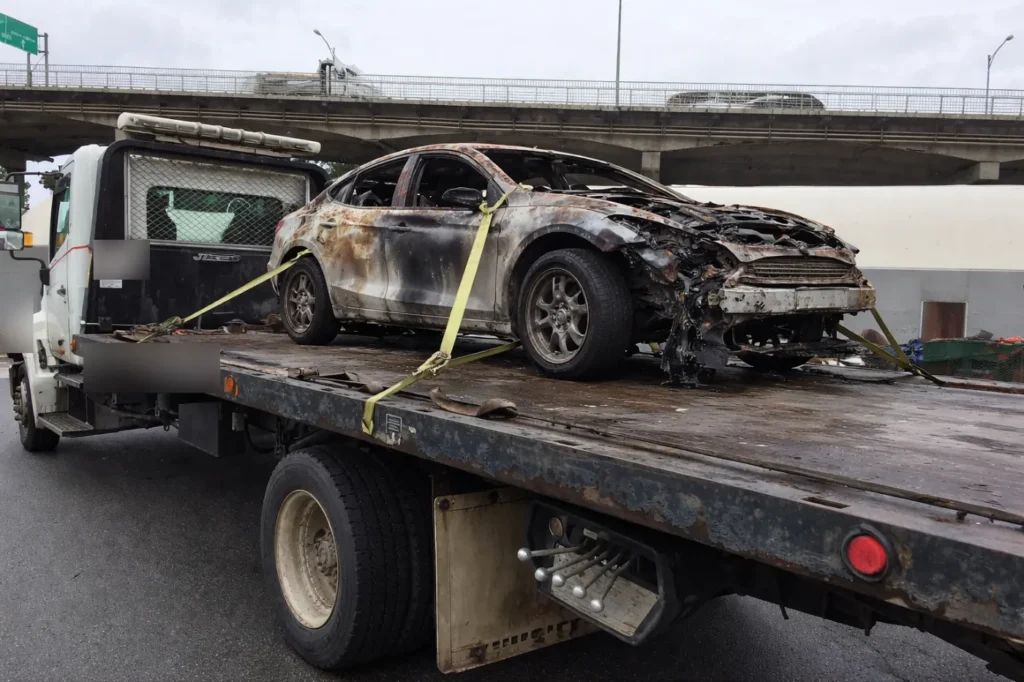
Some EVs reach the point where nobody will repair them: a first Leaf down to a few bars, an i-MiEV that hasn't moved in a year, a burnt-out shell behind a shop. They still have value, and they need careful handling. We take them.
- We pay for scrap EVs. We don't charge to take them
- Burnt, flooded, stripped and parts-missing cars considered
- Cars go to dismantlers and recyclers set up for high-voltage batteries
0 of 5 details filled in
Get a price for your EV
Five quick details and we call you back with a number.
EVs we see at the end of the road
The first wave of EVs in BC is now ten to fifteen years old. These are the ones we pick up most at end of life:
- 2011 to 2015 Nissan Leafs with the original 24 kWh pack
- Mitsubishi i-MiEV, Smart ED and Fiat 500e
- Ford Focus Electric, Chevrolet Spark EV and Volkswagen e-Golf
- Early BMW i3s, including range extender models
- First-generation Kia Soul EVs
- High-kilometre Teslas, taxis and ride-hail cars that have done their time
- Older hybrids, like second and third generation Priuses
Why an EV shouldn't be scrapped like a gas car
A regular scrap yard prices a car by weight and crushes it. An EV's lithium-ion battery can't go through a crusher. It has to come out first, by someone trained to handle high voltage, and a damaged pack can start a fire if it's mishandled. That's why some yards won't take EVs at all, or charge you to.
The battery also has real value, even when it's tired. Modules get reused in pack repairs and energy storage, and the metals inside are worth recovering. That value is why we can pay for a car others call junk.
What happens after pickup
Each car is assessed. Parts that can go back into service, like drive units, modules, chargers, wheels and body panels, get a second life. The battery either goes on to reuse or to material recovery, and the rest of the car goes to metal recycling.
Don't pull the battery yourself
The pack runs at several hundred volts and weighs hundreds of kilograms. Taking it out without training and the right tools is dangerous, and it lowers what the car is worth. We buy whole vehicles only, so leave it in.
Burnt or flooded EV? Call first
A damaged lithium-ion battery can reignite hours or even days later. Keep a burnt or flooded EV outside and away from buildings and other cars, don't try to power it on, and describe it on the call. We'll be straight about whether we can take it.
Scrap EV paperwork in BC
Same as any vehicle: the registration signed by every registered owner, photo ID, and ICBC's Transfer/Tax Form signed after you're paid. If the registration is lost, any Autoplan broker can get you a copy. Keep your plates. They belong to ICBC, and you can move them to your next vehicle or hand them in at a broker.
We pick up scrap EVs across the region, including Langley acreages and Abbotsford farms where old cars tend to sit for years.
Questions about scrapping an EV
Will you take an EV with the battery already removed?
Usually, but the price drops a lot because the pack is the most valuable part. Tell us exactly what's been taken off the car so the price holds at pickup.
Do you charge to remove a scrap EV?
No. We pay you for it, and the flatbed tow is included.
My EV burned. Can you take it?
Sometimes. It depends on how badly it burned and whether the pack was involved. Keep it outside, away from buildings, and describe it when you call. We'll tell you honestly.
I lost the registration. Can I still sell it?
Yes. Get a replacement registration from any Autoplan broker with your ID, then call us.
Keep reading
Want it gone this week?
Call with the year, model and what happened. We'll ask a few questions about the battery and where it's parked, then give you a number.